Tree Removal Near Me: Safe Removal Techniques Explained
Below are the core techniques reputable crews use to remove trees while protecting people, roofs, fences, and nearby utilities.
What makes a tree removal “safe” in the first place?
Safe removal means controlling where every piece of the tree goes from the first cut to final cleanup. Even with cheap tree removal, professionals focus on reducing risk by assessing defects (cracks, cavities, lean, dead limbs), identifying targets (homes, cars, power lines), and choosing a method that matches the site.
They also set a drop zone, control access, and use PPE like helmets, eye protection, chainsaw chaps, gloves, and hearing protection.
How do they decide whether to fell the tree or dismantle it in sections?
They fell the tree in one piece only when there is enough clear space and the tree is structurally sound. If the yard is tight, the tree is compromised, or there are targets below, they dismantle it.
Dismantling is common in neighborhoods because it allows precise control. Crews remove limbs first, then “block down” the trunk in smaller, manageable sections.
How does controlled felling work when there’s room to drop the tree?
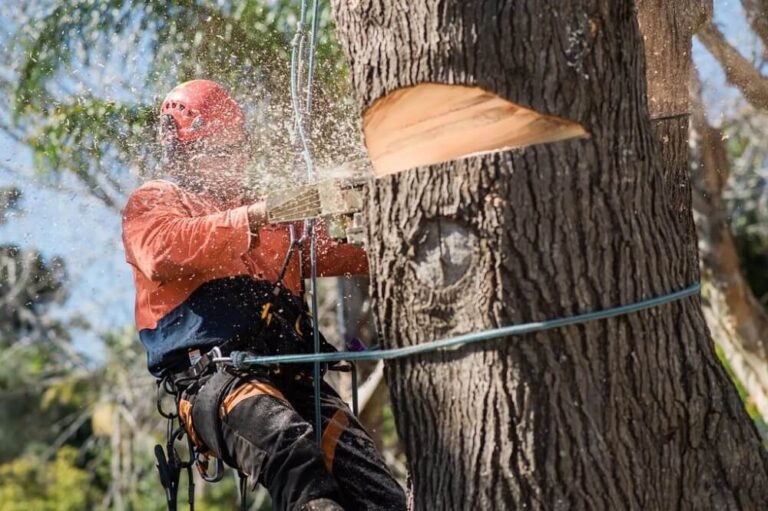
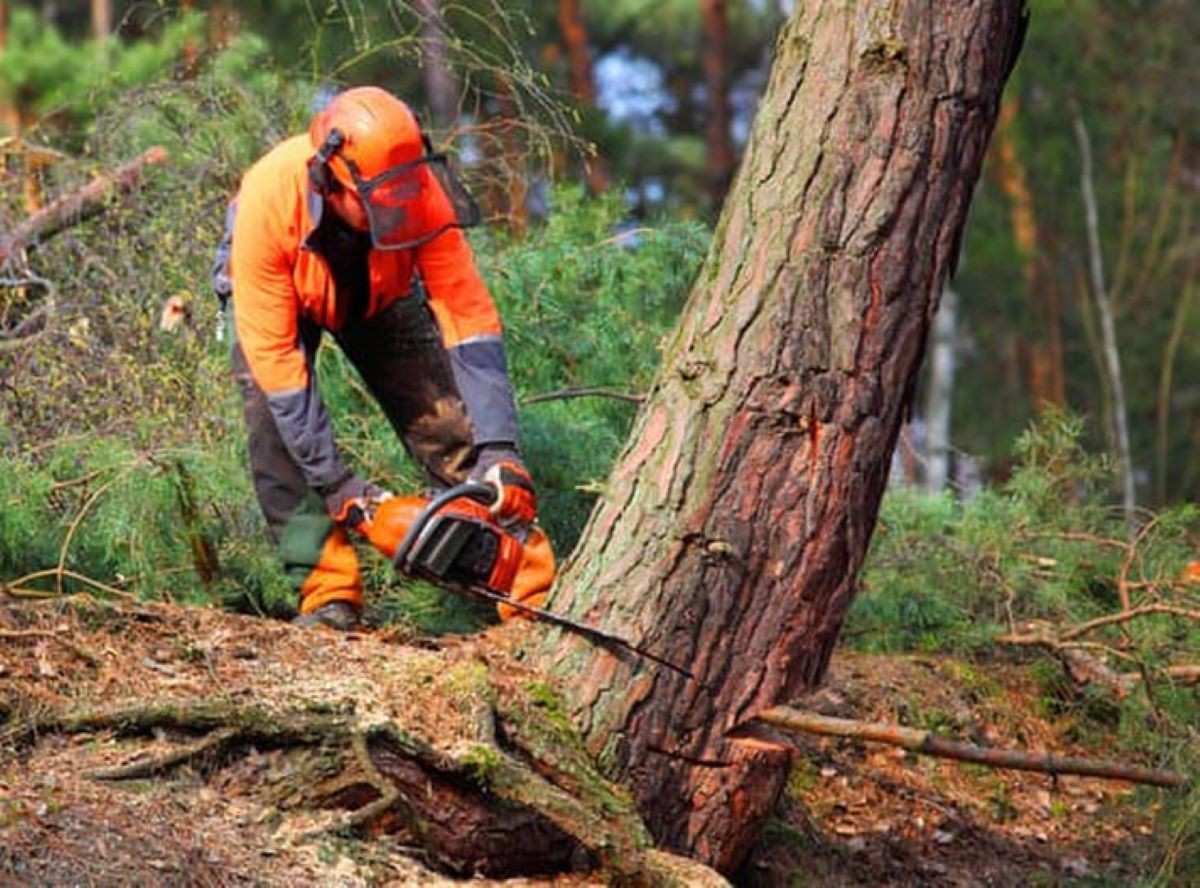
Controlled felling relies on directional cutting and mechanical advantage, not guessing. They clear the base, plan an escape route, and place a face cut (notch) toward the intended lay, then make a back cut that leaves a hinge of holding wood.
Wedges can prevent the tree from sitting back on the saw and help guide the fall. In many cases, they also use a rope or winch to add controlled pull in the intended direction.
How do they remove a tree safely when houses and fences are close?
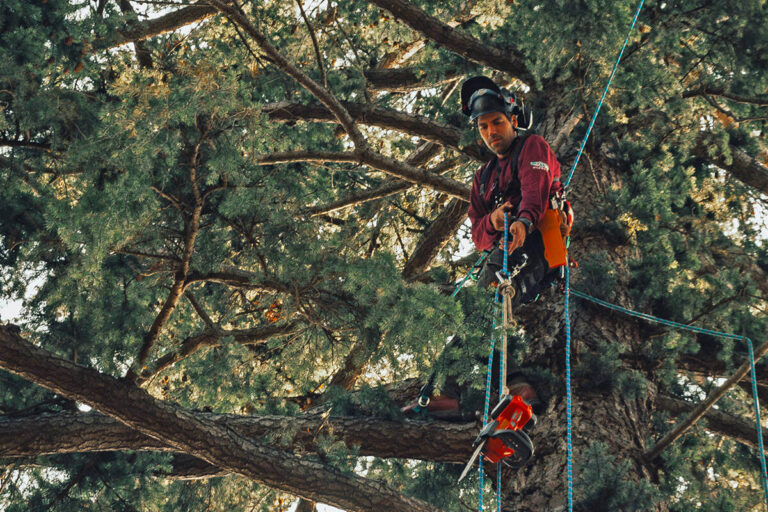
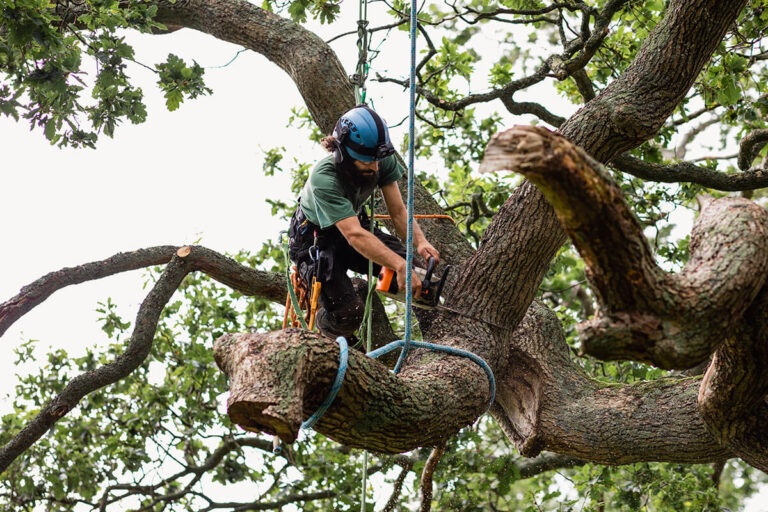
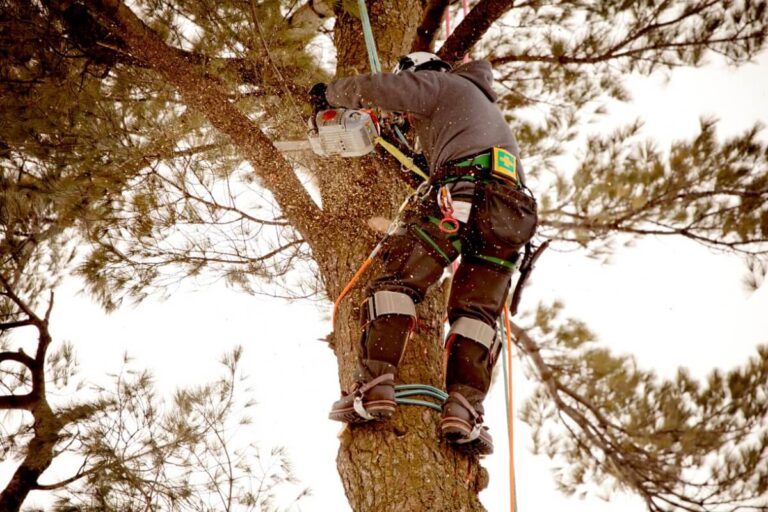
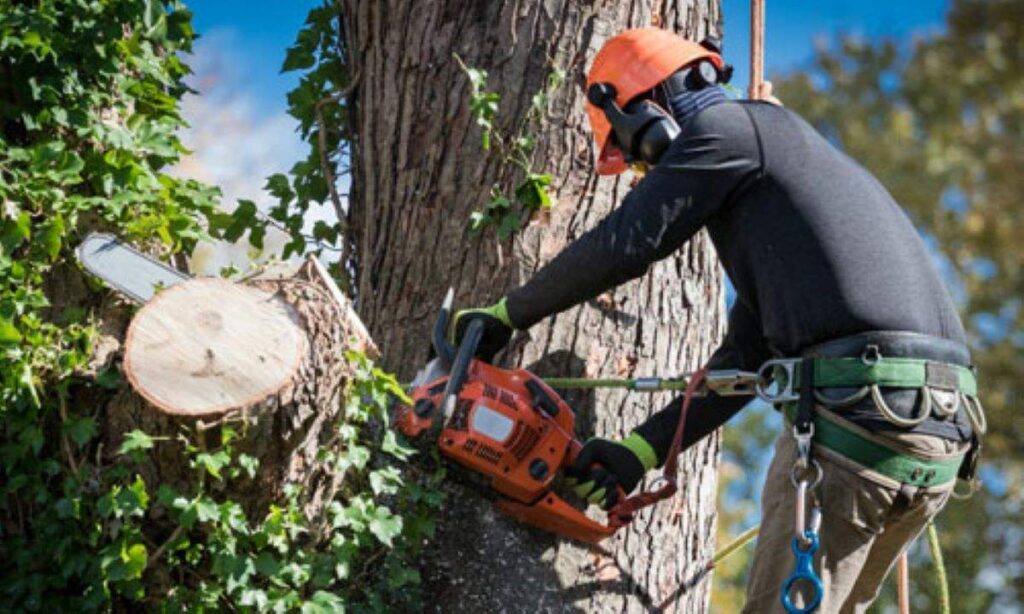
They typically dismantle the tree using climbing or an aerial lift, plus rigging. Limbs are cut and either dropped into a clear zone or lowered with ropes to prevent impact damage.
Rigging often includes friction devices, pulleys, and slings to manage weight and swing. This is where experience matters, because poor rigging can overload anchor points or cause pieces to pendulum into structures.
What is “rigging,” and why is it such a big deal?
Rigging is the system used to control heavy pieces as they’re cut free. They choose tie-in points, calculate forces, and use hardware that matches the load.
A safe rigging setup prevents free-fall, limits shock loading, and keeps pieces from spinning or crashing. It also protects the climber, ground crew, and property by keeping wood under control from cut to landing.
How do they handle trees that are dead, storm-damaged, or leaning?
They treat these as higher-risk removals because the wood can fail unpredictably. They may reduce weight from the crown first, avoid loading weak sections, and change cutting strategies to prevent barber-chair splits.
If the trunk is cracked, uprooted, or the canopy is hung up in another tree, they often use equipment like a crane or a winch. In many cases, they’ll recommend that only a trained, insured professional perform the work.
What happens if the tree is near power lines?
They keep a strict safety buffer and coordinate with the utility provider when needed. If any part of the tree could contact energized lines, they typically stop and arrange for the utility to de-energize, trim, or provide clearance.
They do not “rope it away” casually near conductors. Electrocution risk is one of the most serious hazards in tree removal, and safe crews prioritize clearance planning over speed.
How is stump removal handled safely after the tree is down?
Stump grinding is the most common approach because it avoids deep excavation. They use a grinder to chip the stump below grade, then backfill with grindings or soil depending on the plan for replanting.
They also mark and avoid underground utilities before grinding. A safe setup includes eye and face protection and careful control of debris, especially near windows, cars, and public walkways.
What should they look for when choosing “tree removal near me”?
They should prioritize credentials and risk controls over the lowest quote. A reputable provider can explain their plan, identify hazards, and show proof of insurance.
A quick checklist they can use:
- Proof of general liability and workers’ compensation
- Clear scope (removal, haul-off, stump, cleanup)
- Written estimate and timeline
- Plan for protecting lawns, fences, and landscaping
- Experience with rigging, lifts, or cranes when needed
When is it smarter to stop and call a professional immediately?
If there are power lines, major lean over a structure, visible cracks, uprooting, or significant decay, it is usually not a safe DIY job. The same goes for trees requiring advanced rigging, climbing, or removal over roofs.
In those cases, the safest technique is choosing a qualified local crew who can control the drop, manage the forces, and complete the job without turning a tree problem into a property or injury problem.
Related : Tree Removal Cost Sydney: 6 Factors That Increase Your Quote
FAQs (Frequently Asked Questions)
What defines safe tree removal and why is it important?
Safe tree removal means controlling where every piece of the tree goes from the first cut to final cleanup. It involves assessing defects like cracks, cavities, lean, or dead limbs; identifying nearby targets such as homes, cars, and power lines; and choosing a removal method suited to the site. Safety also includes setting a drop zone, controlling access, and using personal protective equipment (PPE) like helmets, eye protection, chainsaw chaps, gloves, and hearing protection to protect people and property.
How do professionals decide between felling a tree in one piece or dismantling it in sections?
Professionals fell a tree in one piece only when there is ample clear space and the tree is structurally sound. If the yard is tight, the tree is compromised, or there are valuable targets below like houses or fences, they opt to dismantle it. Dismantling involves removing limbs first and then cutting down the trunk in smaller sections for precise control and safety, which is common in neighborhood settings.
What techniques are used for controlled felling of trees with enough space?
Controlled felling relies on directional cutting techniques rather than guessing. Crews clear the base area, plan an escape route, make a face cut (notch) toward the intended direction of fall, then perform a back cut leaving a hinge of holding wood. Wedges may be used to prevent the tree from pinching the saw and to guide its fall. Additionally, ropes or winches can provide controlled pull to ensure the tree falls safely where planned.
How is tree removal safely conducted near houses, fences, or other structures?
When trees are close to structures like houses or fences, crews typically dismantle them using climbing or aerial lifts combined with rigging systems. Limbs are cut carefully and either dropped into a designated clear zone or lowered with ropes to avoid impact damage. Rigging includes friction devices, pulleys, and slings to manage weight and movement safely. Experienced rigging prevents overloading anchor points and avoids swinging debris that could harm property or people.
What is rigging in tree removal and why is it critical for safety?
Rigging refers to the system of ropes, pulleys, slings, and hardware used to control heavy pieces of a tree as they are cut free during removal. Proper rigging involves selecting secure tie-in points, calculating forces involved, and using equipment rated for those loads. A safe rigging setup prevents free-fall of branches or trunk sections, limits shock loading on anchors, controls swinging motions, and protects both climbers and ground crews as well as surrounding property throughout the removal process.
When should someone call professional tree removal services instead of attempting DIY removal?
It is smarter to call professionals immediately if the tree is near power lines; has a major lean over structures; shows visible cracks or signs of uprooting; exhibits significant decay; requires advanced rigging techniques; involves climbing; or needs removal over roofs. These situations pose high risks that untrained individuals cannot safely manage. Qualified local crews have the expertise and equipment needed to control drops effectively and prevent property damage or personal injury.